Anonymous tip-offs and back-payments increase for Fair Work Ombudsman
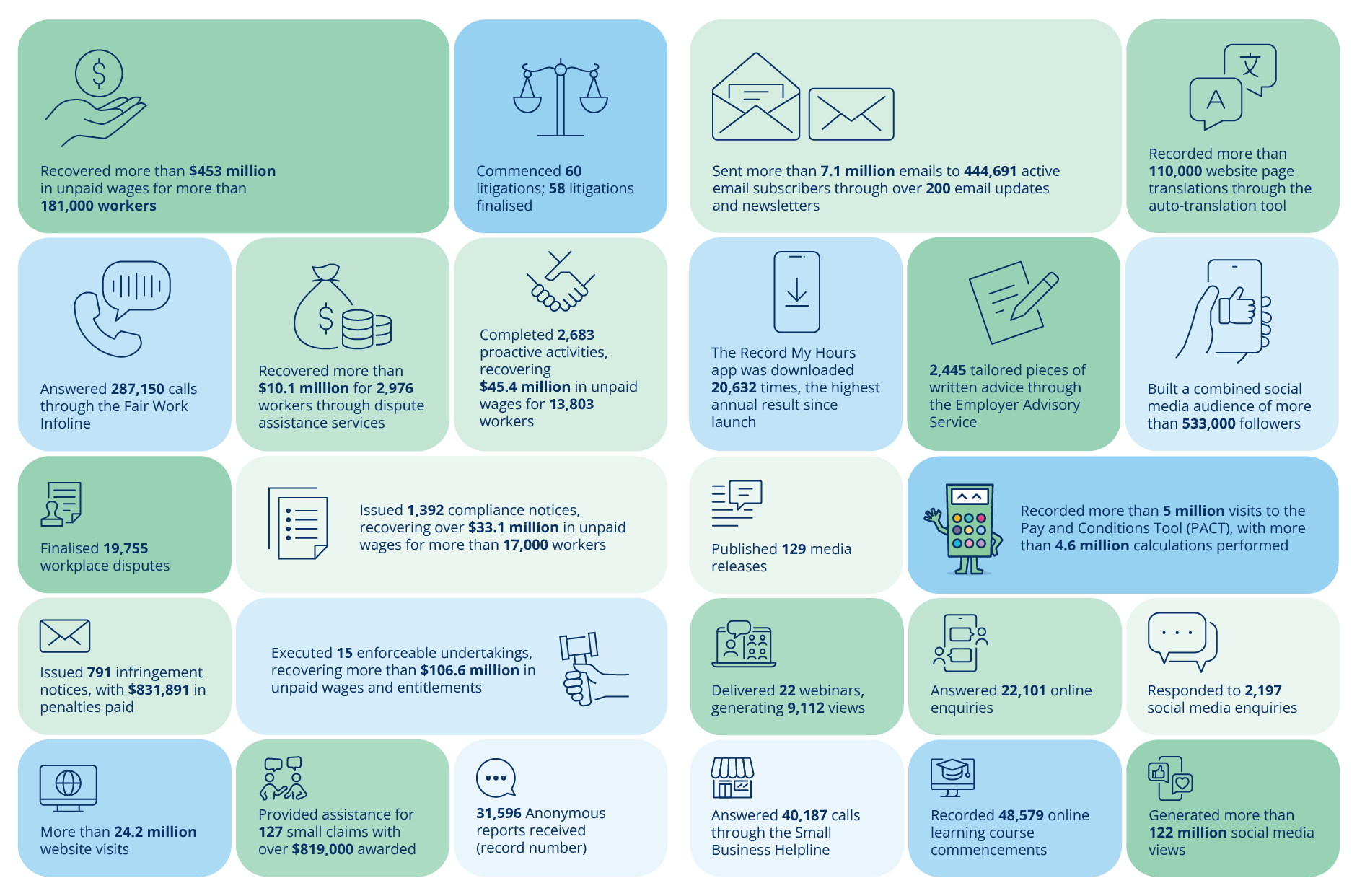
The Fair Work Ombudsman received a record 31,596 anonymous reports last year, as recoveries for underpaid workers increased by 27 per cent.
The figures are among those detailed in the Fair Work Ombudsman’s newly published 2025-26 annual report.
More than 181,000 workers had a total of $453 million in underpaid wages back-paid in the financial year, an increase of about $95 million from the year before. The cumulative back-payments for Australian workers across the last six financial years stands at close to $2.5 billion.
In the enforcement space, the Fair Work Ombudsman executed 15 Enforceable Undertakings (EUs) with employers who each committed to improved practices and governance in addition to full back-payments to their staff. Overall, employers under an EU back-paid $106.6 million in wages and entitlements, including superannuation and interest.
Fair Work Ombudsman Anna Booth applauded workplace participants for flagging potential wrongdoing through the anonymous reports, just one of the avenues that the public could reach the national workplace regulator.
“Anonymous reports help us identify emerging issues, detect patterns, and target education, engagement and compliance activities where they’re needed most,” Ms Booth said.
The anonymous reports figure was 23 per cent higher than the equivalent tip-offs received in 2024-25 (25,608).
During 2025–26, large corporates made up $217.3 million of the overall back-payments, paid to over 110,000 workers.
Ms Booth said the regulator continues to obtain strong recoveries as part of its strategic enforcement approach.
“For all employers, including large corporates, the Fair Work Ombudsman expects a high priority to be placed on following workplace laws. We offer a wealth of free resources and information to assist voluntary compliance, while also holding employers to account when they are not meeting their obligations to their employees,” Ms Booth said.
"We continue to target the root causes of non-compliance and focus our efforts where they can have the greatest impact, with our strategic enforcement model promoting long-term behavioural change, improved workplace compliance, and higher-level enforcement if deliberate, serious and systemic issues are found.
“The Fair Work Ombudsman is also continuing to expand our collaborations with fellow regulators as well as employer organisations and unions – all stakeholders have a crucial role to play in ensuring a culture of compliance with workplace laws.”
“For instance, our investigations across non-compliant horticulture regions as well as our Inquiry into workplace relations compliance in the disability support sector have been enhanced by support from unions and employer groups.”
In the FWO priority sector of fast food, restaurants and cafes, the regulator recovered more than $5.6 million for 3,538 workers in 2025-26 and commenced 16 litigations (about 27 per cent of all litigations commenced in the year).
In the building and construction sector, another priority area, recoveries exceeded $6.8 million for 932 workers, with nearly 3,000 matters completed and 14 litigations commenced in 2025-26. Back-payments to sector workers have exceeded $23.2 million from November 2022 to 30 June 2026.
In aged care, two EUs with major aged care providers signed in 2025-26 delivered recoveries of more than $16 million after underpayments that occurred across many years (the Southern Cross Care (NSW & ACT) and Southern Cross Care (WA) matters).
Across a range of sectors, in 2025–26, FWO commenced 60 litigations and secured $2.3 million in penalties. Notable penalties included $213,120 against the University of New South Wales over systemic record-keeping and pay slip contraventions that hindered FWO's investigation into underpayments (the University later also signed an EU). In another matter, against the Construction, Forestry and Maritime Employees Union (CFMEU) and four of its Victorian officials, penalties of $171,500 reinforced the importance of compliance with workplace laws by all participants in the building and construction industry.
The workplace regulator also issued 1,392 Compliance Notices, recovering more than $33 million for more than 17,000 workers. FWO handed out 791 Infringement Notices across all sectors, sending a warning to employers to get their payslip and record keeping obligations in order or face the consequences (a total of $831,891 in fines).
“As ever, we will prioritise helping small business employers and employees, and vulnerable workers including visa holders. If you’ve got concerns about workplace rights please continue to contact the FWO,” Ms Booth said.
All employers and employees seeking free advice and assistance about their workplace rights and obligations can visit www.fairwork.gov.au or call the Fair Work Infoline on 13 13 94. A free interpreter service is available on 13 14 50.
Small businesses can find resources at the Small Business Showcase and get free written advice from the FWO’s Employer Advisory Service. Employers can also contact their employer organisation if they are a member.
Employees can seek information from their employer, or their union if they are a member. Workplace issues can be reported online anonymously, including in languages other than English.
View the 2025-26 Office of the Fair Work Ombudsman Annual Report.
Performance snapshot